
Commercial & Industrial Site Design
Business parks, retail centers, industrial facilities, and the parking, access, and utility coordination that make them work. Bailey takes commercial and industrial sites from raw parcel to functioning, code-compliant ground.
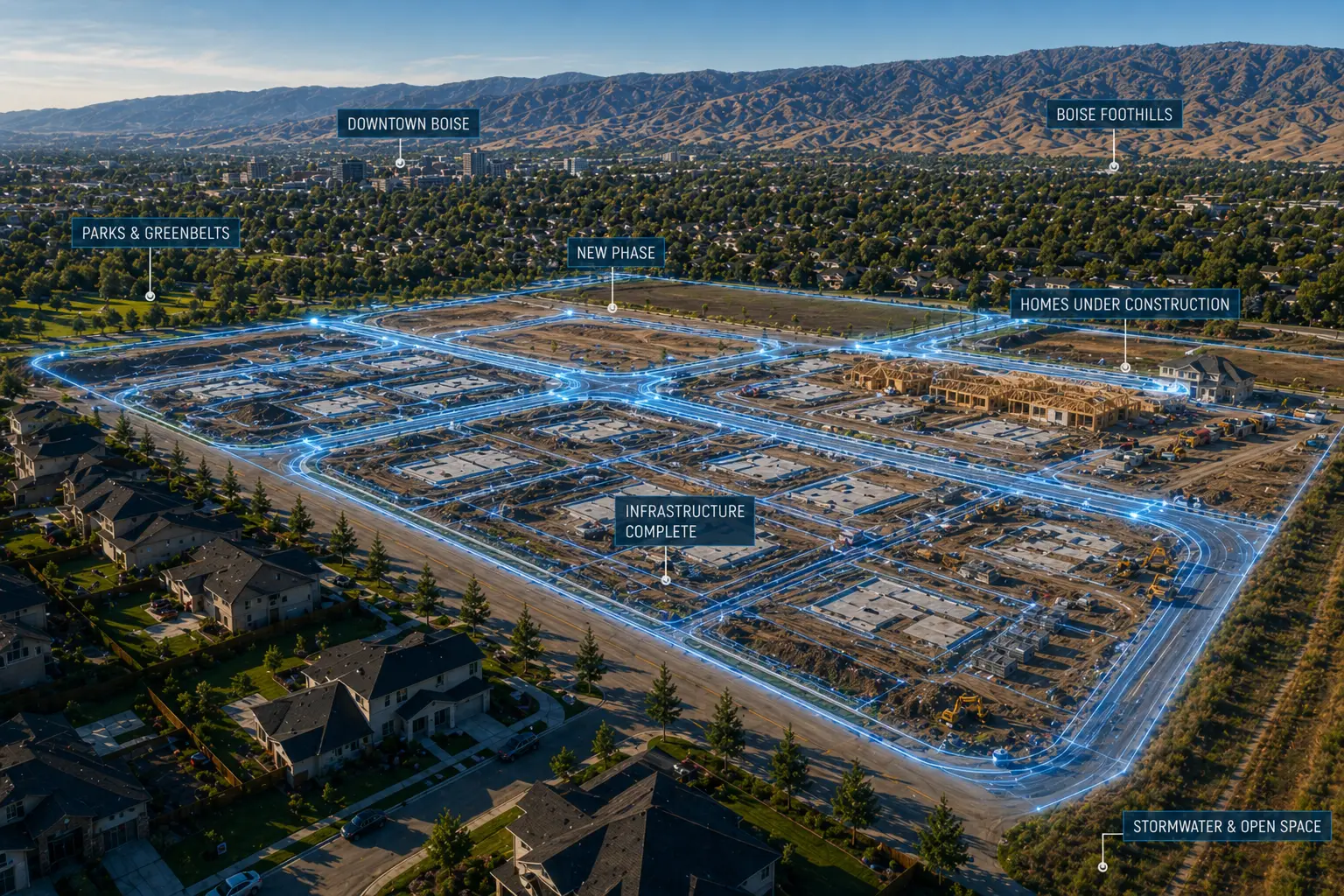
Built for users, not just for square footage.
Commercial and industrial site design is a different discipline from residential. The site has to serve a provider, prospective tenants, customers or workers, and the surrounding community simultaneously — under a denser stack of regulations, performance standards, and infrastructure demands than a residential subdivision will ever face. Parking is a primary design driver. Access has to separate customer flows from service flows. Utilities have to be coordinated across electrical, gas, water, sewer, and telecom from day one. Bailey designs for all of it under one roof.
Business Parks
Master-planned multi-tenant industrial environments — covenants, shared infrastructure, and phased build-out.
Read more → 02Retail Centers
Strip, neighborhood, and community-scale retail — parking, customer circulation, and anchor visibility.
Read more → 03Industrial Facilities
Warehouses, light manufacturing, and flex-tech — truck circulation, loading docks, and pad-grade design.
Read more → 04Parking Solutions
Stall geometry, drive aisles, ADA, drainage, and the slope rules that keep a lot from freezing in winter.
Read more → 05Site Access Design
Driveways, sight distance, queuing, turn-lane geometry, and the AASHTO/ITE standards behind every approval.
Read more → 06Utility Coordination
Wet and dry utilities — electric, gas, water, sewer, telecom — coordinated before the first conflict shows up in the field.
Read more →The site as a system, not a building on a lot.
A commercial site is a system, not a building on a lot. Bailey starts every commercial project by asking what the site has to do for the people who use it — customers, tenants, service vehicles, and the surrounding community. The answers determine the parking layout, the circulation hierarchy, the utility easements, and the grading plan before the first line gets drawn.
Parking is almost always a primary driver. Utility coordination is where commercial projects most often slip. Customer and service circulation need to be separated. And the work doesn't stop at design — Bailey supports Phase 6 as engineer of record through observation reports, agency inspection coordination, and punch-list support while the contractor performs the work.
Read the full approach →Where it fits in the 9-phase process.
Site Identification & Feasibility
Determine zoning conformance, parking yield, utility availability, and access feasibility before the deal closes.
Entitlements (including Preliminary Plat)
Concept plan, neighborhood meetings, planning commission, council. Commercial entitlements often require traffic impact studies and utility service letters.
CDS — Construction Document Set
Full civil design — grading, utilities, stormwater, access, parking, lighting, landscape coordination.
Construction
Construction observation reports, agency inspection coordination, and punch-list support while the contractor performs the work.
See the full 9-phase process →
Bailey's construction-phase role is professional engineering support: observation reports, agency inspection coordination, record drawings, and punch-list support. Contractors, builders, and developers perform construction and vertical development.